How to Improve Workability and Fluidity of Concrete Mixtures?

Time:2026-03-20 Author:Charlotte
0%

Improving the workability and fluidity of concrete mixtures is a critical focus in modern construction. Experts like Dr. Emily Carter emphasize this process, stating, "Enhanced fluidity yields stronger structures and reduces labor costs." Her insight reflects the industry's need for better concrete solutions.

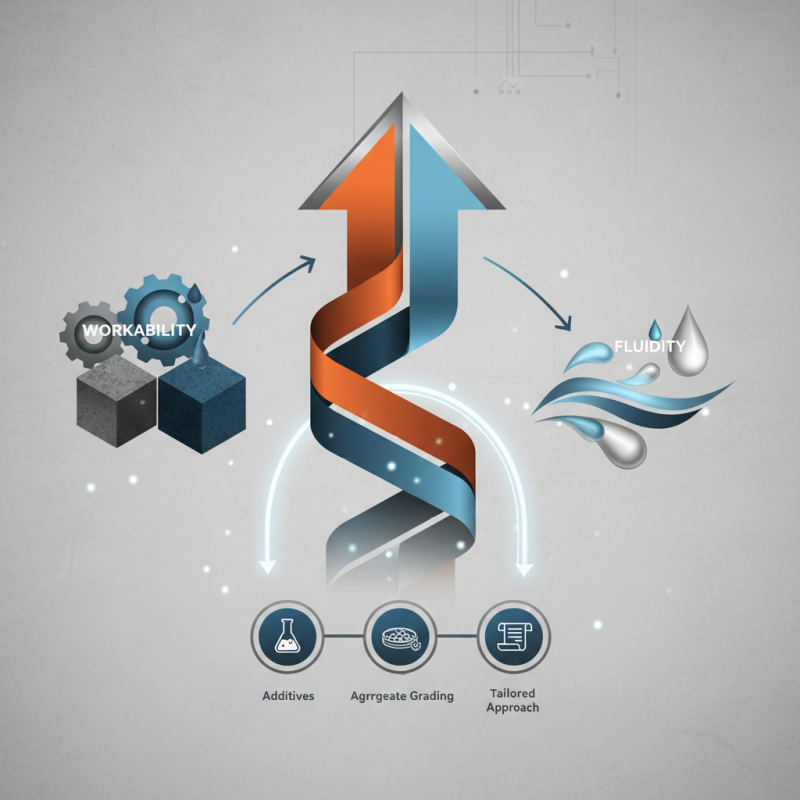
Concrete mixtures must offer the right balance of fluidity and workability. Many projects face challenges with poor mixture handling. These problems can hinder the pouring process and affect the quality of the final product. Adjusting the mixture's components can lead to significant improvements. For example, incorporating additives or using specific grading of aggregates can enhance the overall performance.

Yet, achieving this balance is complex. Some mixtures may become too fluid, compromising strength. Others may lack the necessary workability for proper application. Each project demands a tailored approach to improve workability and fluidity of concrete mixtures. Refining these mixtures often requires testing and adjustments, leaving room for reflection and learning within the industry.
How to Improve Workability and Fluidity of Concrete Mixtures?

Factors Influencing the Workability of Concrete Mixtures

Workability of concrete is crucial for construction projects. Factors affecting this property include water content, aggregate size, and admixtures. Balancing these can be tricky. Too much water can weaken the mix, while too little may hinder flow.

The type of aggregates plays a significant role. Larger aggregates might create voids, making the mixture hard to handle. Conversely, finer aggregates improve workability but can form a sticky consistency. This balance is not always easy to achieve. Adjustments often require testing and patience.

Temperature is another influencing factor. Higher temperatures lead to faster setting times, which can reduce fluidity. In hot weather, adding ice may be necessary. The timing of mixing and pouring can affect the final results, leading to potential inconsistencies. Each project presents unique challenges, and reflection on past mixes can offer insights for future improvements.

Optimal Water-Cement Ratios for Enhanced Fluidity in Concrete

Achieving optimal workability in concrete begins with the right water-cement ratio. A lower ratio usually leads to stronger concrete. However, it can also make the mix stiffer and harder to work with. Finding the balance is key. A common ratio for enhanced fluidity is around 0.5. This ratio provides sufficient moisture for hydration while maintaining workable consistency.

High fluidity allows for better placement and reduces the chances of segregation. With too much water, the concrete can become weak. Additionally, additives can further enhance workability. These can help control the water content without sacrificing strength. The challenge lies in understanding how these factors interact. It requires testing and adjustments.

Some may find their mix overly fluid or too thick after initial attempts. Reflecting on these outcomes is vital. Achieving the perfect mix is a process that demands patience. By revisiting the mixing ratios and adjusting, it leads to more successful results in future projects.

The Role of Admixtures in Improving Concrete Workability

Admixtures play a critical role in enhancing the workability and fluidity of concrete mixtures. They are used to modify properties like setting time and flow characteristics. According to the American Concrete Institute, incorporating admixtures can improve workability by as much as 30%. This makes pouring and finishing much easier, especially in complex forms.

Adding water-reducing admixtures is a common practice. They allow for less water to be used in the mix while maintaining the same level of workability. Data from industry studies show that a 10% reduction in water can increase concrete strength by 20%. However, not all admixtures perform the same, and improper use can lead to issues like segregation or decreased durability.

Tips: Always measure the admixture carefully. Even small deviations can affect the mixture's performance. Test different combinations to find the best fit for your project. Observing how the mixture behaves during workability tests can provide valuable insights. A reflective approach helps in understanding which admixtures work best together, avoiding unnecessary complications during mixing.

Impact of Admixtures on Concrete Workability

Aggregate Size and Shape Effects on Concrete Flowability

The size and shape of aggregates significantly influence the flowability of concrete mixtures. Studies show that larger aggregates can cause less workability. This is due to increased interlocking between larger particles. For instance, aggregates with a maximum size of 20 mm often lead to improved stability in concrete. However, they might also create a denser mix, requiring more water to maintain workability.

Round-shaped aggregates enhance flowability. Their smooth surfaces reduce friction, promoting easier movement during mixing and pouring. In contrast, angular aggregates can trap air and create drag, limiting fluidity. A report indicated that a mix with 30% rounded aggregates had a 15% better flow rate compared to a mix with angular aggregates.

Also, the grading of aggregates plays a critical role. Well-graded aggregates often result in better packing and reduced voids. However, achieving the right balance can be challenging. An improper mix can lead to clumping, which hinders the concrete's flowability. Continuous adjustment and testing are necessary for optimal results, reflecting the need for an adaptive approach in concrete mix design.

Testing Methods to Evaluate Workability in Concrete Mixtures

Testing workability in concrete mixtures is crucial. It ensures that the mix can be placed, compacted, and finished properly. Several methods help evaluate this property. The slump test is one of the most common. It measures the vertical subsidence of a concrete cone. The results give a quick indication of fluidity.

Another method is the flow table test. This measures the spreading of the mixture. It provides a visual assessment of workability, especially valuable for self-consolidating concrete. These tests are practical, but they also have limitations. Environmental factors like temperature can affect results. Therefore, it is essential to conduct tests under controlled conditions.

Additionally, the Vebe test is useful for very stiff mixes. It employs a vibrating table to assess how quickly the mixture achieves a certain degree of workability. Each method has its nuances and may not always reflect real-world applications. Engineers should reflect on these observations when evaluating mixtures. The key is to understand the specific requirements of each project.

How to Improve Workability and Fluidity of Concrete Mixtures? - Testing Methods to Evaluate Workability in Concrete Mixtures

Testing Method Description Typical Use Case Advantages Limitations
Slump Test Measures the consistency of fresh concrete by determining the slump from a standard cone. General evaluation of workability in construction sites. Quick and easy to perform; provides instant results. Does not provide a full understanding of concrete properties; affected by several factors.
Flow Table Test Determines the flowability of concrete by measuring the spread of a concrete sample on a flow table. Ideal for more fluid concrete mixtures. More sensitive to variations in workability than the slump test. Requires specific equipment and can be more time-consuming.
Vebe Test Assesses the workability of concrete by measuring the time taken for a sample to deform under vibration. Used for concrete with low workability. Provides accurate measurement for stiff mixes; indicates the degree of compaction. Requires special equipment; interpretation can be subjective.
Compacting Factor Test Measures the workability of concrete based on the degree to which concrete fills a mold. Best for concrete with a low to medium workability. Gives a good indication of the compactibility of concrete. Can be affected by aggregate size and shape; requires careful execution.

FAQS

: What is the optimal water-cement ratio for concrete fluidity?

: A common ratio is around 0.5, balancing hydration and workability.

How do water levels affect concrete strength?

Too much water can weaken concrete. A lower water ratio usually leads to stronger mixes.

Why are admixtures important in concrete?

Admixtures enhance workability and fluidity, modifying properties like setting time and flow.

Can admixtures increase concrete strength?

Yes, a 10% reduction in water can improve strength by up to 20%.

What are the common tests for assessing concrete workability?

The slump test and flow table test are widely used methods.

What can affect the results of workability tests?

Environmental factors like temperature can influence test outcomes significantly.

How should one approach measuring admixtures?

Measure carefully; even small variations can change performance unexpectedly.

Is the perfect concrete mix easy to achieve?

No, finding the right mix requires testing and adjustments. It takes time.

What should you do if a mix is too thick or fluid?

Reflect on the outcome and adjust the mixing ratios in future attempts.

Why is a reflective approach important in mixing?

Reflecting on past mixes helps understand interactions and improve future results.

Conclusion

To improve workability and fluidity of concrete mixtures, several key factors must be considered. The optimal water-cement ratio is crucial, as it directly influences the consistency and ease of handling the mixture. Additionally, the use of admixtures can significantly enhance workability by modifying the properties of the concrete, allowing for better flow without compromising strength.

Furthermore, the size and shape of aggregates also play a vital role in determining the flowability of the mixture. Larger, irregularly shaped aggregates can hinder movement, while smaller, rounded aggregates typically promote better fluidity. Testing methods are essential for evaluating workability, ensuring that concrete mixtures meet the desired performance standards. By addressing these factors, it is possible to effectively improve workability and fluidity of concrete mixtures, ultimately leading to higher quality construction outcomes.

Charlotte

Charlotte

Charlotte is a seasoned marketing professional with a deep understanding of the company's portfolio and a passion for elevating its presence in the market. With a keen eye for detail and a commitment to excellence, she ensures that our professional blog is regularly updated with insightful articles......