Choosing China’s top adhesives for cold-weather projects requires more than comparing price, viscosity, or supplier claims. Low temperatures slow chemical reactions, increase viscosity, and reduce wetting across concrete, metal, plastic, and coated surfaces. A bond may look firm in the morning, then fail after repeated freeze-thaw cycles.
Real jobsite experience matters. Applicators often face chilled panels, condensation, dusty substrates, and limited curing time. These details can change performance dramatically. The right adhesive should maintain workable flow, strong initial grab, and reliable cure strength under controlled low-temperature conditions. Surface preparation remains essential. Clean, dry, lightly abraded surfaces usually provide a better starting point.
Dr. Eric M. Petrie, a recognized adhesives specialist and author, has emphasized, “Adhesive bonding is a process, not merely a product choice.” That principle guides this comparison. Product chemistry, substrate compatibility, storage, mixing accuracy, and application temperature all influence the final result.
This guide examines epoxy, polyurethane, acrylic, silicone, and hybrid adhesive options from China. It considers shear strength, flexibility, open time, moisture tolerance, and cold-cure behavior. Laboratory data helps, but field validation matters more.
Small mistakes become expensive.
For teams seeking to Improve adhesion performance under low‑temperature construction conditions, supplier transparency is equally important. Request technical data sheets, test reports, batch information, and application guidance. Some claims may sound impressive yet lack independent verification. A careful selection process can reduce rework, but it cannot remove every uncertainty. Cold construction remains demanding, and even a strong adhesive may underperform when the substrate is poorly prepared.
Low-temperature adhesives are formulations designed to bond when surfaces and surroundings are cold. Standard adhesives often become stiff below their glass-transition temperature. Their contact with the substrate then becomes limited. Low-temperature grades use flexible polymers, selected tackifiers, and controlled plasticizers. These ingredients preserve movement and surface wetting. Some hot-melt systems also use lower application temperatures. They must still form a stable film after cooling. The chemistry is only part of performance. Surface condition matters just as much.
Adhesion begins when the adhesive flows into microscopic surface irregularities. Pressure helps create intimate contact. Molecular attraction then develops across the interface. In flexible systems, the polymer absorbs peel energy instead of cracking immediately. Cold metal, plastic, and coated cartons behave differently. Metal can hold condensation. Plastic may contract or release additives. A clean, dry surface is essential. Even a thin frost layer can act like a barrier. Apply firm, even pressure. Allow enough dwell time. Shortcuts often reduce bond strength.
In factory evaluations, I would compare peel, shear, and failure modes at the actual service temperature. A bond that feels strong at room temperature may fail at minus ten degrees Celsius. Test after cooling, not only before it. Record surface energy, pressure, dwell time, and storage history. This makes results repeatable and easier to audit. I still question simple pass-or-fail claims. Cold adhesion can change with humidity, vibration, and repeated temperature cycling. A small test panel may reveal edge lifting before production begins.
China Top Adhesives for Better Low Temperature Adhesion?
Cold conditions expose weaknesses that remain hidden at room temperature. The best adhesive depends on substrate, moisture, loading, and cure time. Epoxy adhesives provide strong structural bonds on metal, ceramic, and rigid plastics. Many formulations resist low temperatures after full curing. However, standard epoxy can become too viscous during application. Warming the adhesive may help, but uncontrolled heat can shorten working time.
Acrylic adhesives often perform well on metals and selected plastics. They usually tolerate impact and temperature changes better than brittle systems. Polyurethane adhesives suit materials that move slightly, such as wood, rubber, and insulated panels. Their flexibility helps absorb contraction during freezing cycles. Cyanoacrylate adhesives cure quickly, yet they can become brittle under repeated cold shock. They are better for small, close-fitting parts than heavily loaded joints.
Field testing matters more than a generic temperature label. Clean frost, oil, and condensation from both surfaces. Allow the substrates to reach the recommended application temperature. A bond may feel firm but remain weak inside. I have seen rushed winter repairs fail after one night below freezing. That result changed my practice. I now test peel strength, shear strength, and aging after several cold cycles. Technical data is useful, but real assemblies can behave differently. Check the exact material pairing and curing schedule before production use.
Typical lower continuous-use temperature limits for common adhesive families. Lower values indicate better suitability for cold environments, although the actual result depends on formulation, substrate, curing, moisture, and joint design.
Data shown are representative generic engineering values commonly found across technical data sheets; they are not tied to any company or brand and should be verified with product-specific testing.
Cold-weather bonding requires more than a low advertised application temperature. Compare glass-transition temperature, open time, viscosity, and peel strength. MarketsandMarkets estimated the global adhesives and sealants market at about USD 78.6 billion in 2023, with steady growth expected through 2028. That growth reflects wider material choices, not automatic cold-weather reliability. Ask suppliers for test data at -20°C, -30°C, or your actual service temperature.
ASTM D1002 shear testing and ASTM D903 peel testing can expose meaningful performance differences.
Testing matters.
In practical trials, store the adhesive, substrate, and test panels at the target temperature for at least 24 hours. Clean metal panels may bond well, while dusty or oily surfaces fail quickly. Check whether the adhesive becomes brittle after curing.
Smithers’ Future of Adhesives and Sealants to 2028 highlights sustainability and higher-performance formulations as major industry directions, but field conditions remain messier than laboratory reports.
I have seen strong initial bonds fail after thermal cycling. That result deserves review, not excuses.
Tips: Compare results from three temperatures, not one. Record surface preparation, pressure, cure time, and humidity. Request batch-level technical data and safety documentation. A cheaper adhesive may demand longer curing, special primers, or heated storage. Measure the complete process cost.
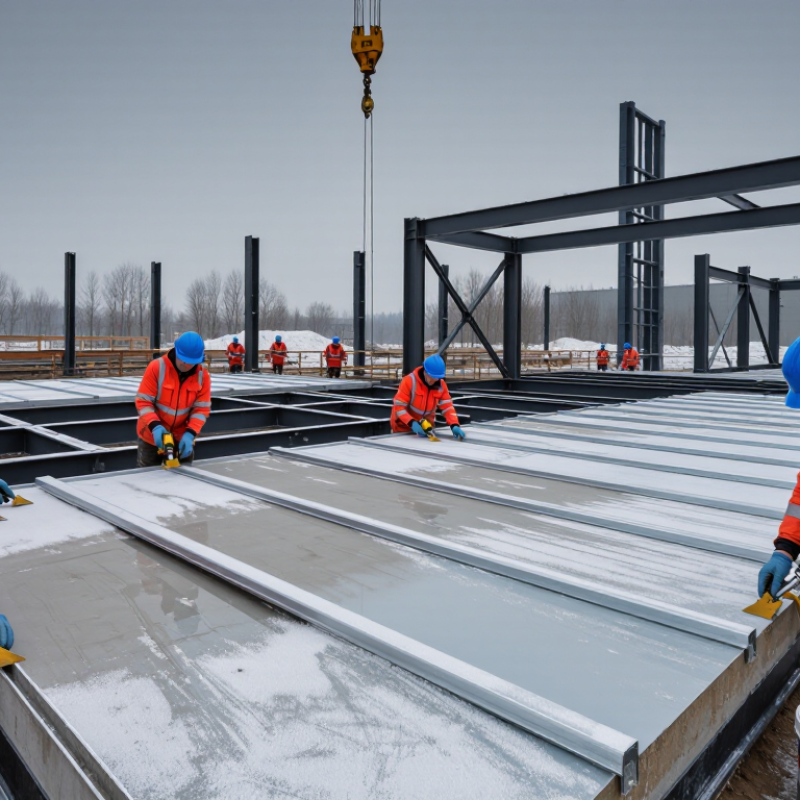
Cold-weather adhesives help materials bond when ordinary products become stiff, slow, or unreliable. They are useful for metal panels, glass, plastics, rubber, composites, and coated insulation boards. In construction, workers use them for exterior trim, window components, roofing details, and prefabricated panels. Automotive repair also benefits from adhesives that remain workable in unheated workshops.
Temperature is only one part of the problem. Frost, condensation, dust, and low surface energy can weaken a joint before curing begins. Good practice includes cleaning the surface, checking moisture, and allowing the adhesive to reach its recommended application temperature. Some formulations bond at temperatures near freezing, while others need controlled warming during curing. Test pieces matter. A small sample can reveal poor wetting, edge lifting, or unexpected brittleness.
Electronics assembly, cold-chain packaging, marine equipment, and outdoor signage may also require dependable low-temperature adhesion. Metals often need abrasion or a suitable primer, while plastics may require treatment because their surfaces resist bonding. I have seen strong adhesives fail on oily aluminum. The adhesive was not the only issue. Cure time can extend sharply in cold air, and rushing the next production step may create hidden weakness. A practical specification should include peel strength, shear strength, storage conditions, and performance after temperature cycling. Even careful testing has limits. Real sites are messier than laboratories.
| Adhesive Material | Typical Low-Temperature Capability* | Key Low-Temperature Advantages | Suitable Substrates | Industries and Applications | Important Selection Considerations |
|---|---|---|---|---|---|
| Acrylic Pressure-Sensitive Adhesive | Down to approximately −40°C, formulation dependent | Good weathering resistance Strong aging stability Good UV resistance Maintains useful tack and peel performance over a broad temperature range when properly formulated. | Aluminum, painted metal, glass, ABS, polycarbonate, PVC, polyester film and other plastics | Automotive trim, outdoor labels, appliance panels, electronics, construction membranes and solar-module components | Surface cleanliness and application pressure are important. Low-temperature adhesion depends on acrylic chemistry, crosslinking and the temperature of the substrate during application. |
| Silicone Adhesive | Often suitable from approximately −50°C to −60°C | Excellent cold flexibility Wide service range Moisture resistance Remains flexible in severe cold and tolerates thermal cycling better than many rigid adhesive systems. | Glass, coated metals, ceramics, silicone rubber, selected plastics and electronic assemblies | Lighting, automotive electronics, refrigeration equipment, outdoor sensors, aerospace components and sealing applications | Silicone generally offers lower initial adhesion to some low-surface-energy plastics. Cure time, primer requirements and contamination control should be evaluated. |
| Two-Part Epoxy | Service temperatures commonly reach approximately −40°C; some systems are rated lower | High structural strength Chemical resistance Good gap filling Provides strong bonds after cure and is useful where load-bearing performance is more important than high flexibility. | Metals, composites, ceramics, glass, rigid plastics and engineered materials | Transportation, machinery, electrical components, wind-power equipment, industrial assembly and repair | Cure speed decreases in cold conditions. The adhesive and substrates may require controlled preheating, and brittle formulations may need toughening for repeated thermal cycling. |
| Polyurethane Adhesive | Commonly around −30°C to −40°C after cure, depending on grade | Flexible bond line Vibration absorption Good impact resistance Accommodates differential movement between materials and remains less brittle than many rigid adhesives. | Metals, wood, concrete, glass, plastics, rubber and composite panels | Refrigerated transport, automotive interiors, building panels, footwear, furniture and general assembly | Moisture, surface preparation and curing conditions affect performance. Some grades require moisture to cure, while excessive moisture can create defects. |
| Hot-Melt Adhesive | Usually approximately −20°C to −40°C in service, grade dependent | Fast setting Solvent-free process High production speed Enables rapid assembly and clean processing, with specialized formulations available for cold-chain and packaging uses. | Paper, cardboard, textiles, wood, plastics, foams and selected coated metals | Packaging, cold-chain cartons, labels, bookbinding, product assembly, hygiene products and furniture | Standard hot melts can become brittle in cold environments. Select a cold-flexible formulation and verify peel, shear and impact performance at the lowest operating temperature. |
| Rubber-Based Pressure-Sensitive Adhesive | Often approximately −20°C to −30°C; specialized grades may perform lower | High initial tack Fast wet-out Good bonding to rough surfaces Provides rapid grab on many substrates, especially where immediate handling strength is required. | Corrugated board, paper, textiles, painted surfaces, wood and selected plastics | Packaging tapes, masking tapes, temporary protection films, labels and general-purpose assembly | Long-term UV, heat and oxidation resistance is generally lower than that of acrylic systems. Storage conditions and substrate temperature strongly influence tack. |
| Cyanoacrylate Adhesive | Many cured formulations operate near −50°C; verify the specific technical data sheet | Very fast fixture Thin bond lines Efficient small-part assembly Bonds many close-fitting parts quickly, reducing the need for clamps or extended fixturing. | Metals, rubber, ceramics, glass and many rigid plastics | Electronics, medical-device components, precision engineering, automotive parts and consumer products | Performance can be reduced on porous, acidic or highly flexible surfaces. It is less suitable for large gaps, high peel loads and continuous high-moisture exposure. |
| Modified Silicone or Silane-Modified Polymer | Commonly approximately −40°C to −50°C after full cure | Flexible and elastic Low odor options Good weather resistance Combines elastic movement capability with broad environmental resistance for interior and exterior bonding. | Concrete, masonry, metals, glass, wood, painted surfaces and many construction plastics | Construction, façades, flooring, windows, transportation interiors and industrial sealing | Full cure may take longer at low temperature and low humidity. Confirm compatibility with coatings, porous substrates and moisture-sensitive materials. |
| Cold-Temperature Acrylic Foam Tape | Specialized grades may remain functional around −30°C to −40°C | Stress distribution Vibration damping Clean appearance The viscoelastic foam layer helps absorb movement and compensate for small surface irregularities. | Painted metal, glass, plastics, powder-coated surfaces and automotive exterior materials | Automotive emblems, signage, façade components, displays, appliances and electronic-device assembly | Initial bonding usually requires adequate pressure and a clean, dry surface. Thick coatings, low-energy plastics and cold application temperatures may require testing or primer. |
| Water-Based Acrylic Emulsion Adhesive | Often limited near 0°C to −10°C unless specially formulated | Low VOC options Easy application Suitable for porous materials Offers practical bonding for paper and porous substrates where environmental and processing requirements favor water-based systems. | Paper, cardboard, textiles, wood, felt and other porous substrates | Packaging, labels, bookbinding, woodworking, textile lamination and interior products | Water evaporation slows substantially in cold or humid conditions. It is generally not the first choice for outdoor structural bonding or freezer-temperature service. |
*Temperature ranges are general industry reference values for fully cured or conditioned adhesive systems, not universal specifications. Actual performance depends on formulation, substrate, surface preparation, bond design, cure conditions, loading mode, moisture and thermal cycling. Always confirm the manufacturer’s technical data sheet and conduct application-specific testing.
Cold-temperature bonding starts with the service environment, not the adhesive label. Industry reports from MarketsandMarkets project the global adhesives and sealants market to grow at roughly 5% annually through 2029. This growth reflects demand for stronger bonds in transportation, construction, packaging, and electronics. Yet a product rated for “cold use” may still fail below its glass-transition temperature, or Tg. Check the technical data sheet for Tg, minimum application temperature, viscosity, and cure speed.
Surface preparation remains practical and decisive. Remove frost, oil, dust, and condensation before bonding. A dry cloth is not always enough. Light abrasion can improve mechanical grip on smooth metal or plastic, but excessive abrasion may damage thin surfaces. Apply a controlled adhesive layer, because thick layers often cure slowly in cold air. ASTM D1002 testing can help compare lap-shear strength, while ISO 11339 is useful for flexible adhesive performance.
Allow the joint to reach its designed pressure and cure time. Cold conditions slow chemical reactions and reduce wetting. Use an insulated work area when possible, and verify substrate temperature with a contact thermometer. A joint that feels firm may not be fully cured. I once underestimated condensation on a chilled panel; the bond looked clean but failed during handling. That assumption was risky. Test small samples under real temperature cycling before full production. Record failure location, cure time, and surface condition for each trial.
Compare glass-transition temperature, minimum application temperature, viscosity, open time, cure speed, shear strength, and peel strength. Test first.
The adhesive may become brittle below its glass-transition temperature. A suitable label does not guarantee reliable field performance. Check data at your actual service temperature.
Request results at -20°C, -30°C, and your lowest expected operating temperature. Comparing one temperature can hide important performance differences. Three temperatures reveal more.
Remove frost, oil, dust, and condensation completely. A dry cloth may leave an invisible moisture film. Light abrasion can improve grip on smooth metal or plastic. Do not damage thin surfaces.
Store the adhesive, substrates, and test panels at the target temperature for at least 24 hours. Use a contact thermometer to confirm their actual temperatures. Cold hands are not accurate instruments.
Yes. Thick adhesive layers often cure slowly in cold air. Apply a controlled, even layer and maintain the designed pressure. A joint may feel firm before curing finishes.
Bond small samples under realistic temperature cycling. Record surface condition, adhesive batch, pressure, humidity, cure time, and failure location. Compare lap-shear and peel results when suitable. Real conditions can be messier.
Include curing time, primers, heated storage, surface preparation, equipment, and rejected parts. A cheaper adhesive may require more handling and longer production time. The first estimate may be wrong.
Low-temperature adhesives are specially formulated to maintain wetting, flow, curing, and bonding strength when surfaces or working environments become cold. This article explains how temperature affects adhesive viscosity, cure speed, flexibility, and final bond durability, then compares common options such as modified epoxies, polyurethane systems, acrylic adhesives, and hot-melt formulations. It also outlines how to evaluate China’s top adhesives through indicators including low-temperature flexibility, open time, curing requirements, shear strength, peel resistance, and surface compatibility.
The discussion highlights applications in construction, transportation, electronics, packaging, renewable energy, and outdoor equipment, where reliable bonding is needed despite cold weather. Readers will learn how to select an adhesive according to substrate type, temperature range, moisture exposure, and load conditions. Practical guidance covers surface cleaning, storage, temperature conditioning, mixing, application thickness, pressure, and curing time to Improve adhesion performance under low‑temperature construction conditions and achieve consistent, long-lasting bonds.

Shengchuang Building