7 Best Ways to Enhance Chemical Resistance of Epoxy Floors

Time:2026-10-07 Author:Sienna
0%

Industrial floors face aggressive chemicals every day. Oils, solvents, acids, alkalis, and cleaning agents can attack weak epoxy systems. The damage may begin quietly, beneath dust and equipment. Later, blistering, discoloration, soft spots, or peeling can interrupt production. No coating is invincible. That assumption fails.

This guide explores seven practical ways to Enhance chemical resistance of epoxy resins for industrial floors. The recommendations reflect coating practice, manufacturer guidance, and routine site observations. A stronger floor begins with accurate chemical identification. Concentration, temperature, contact time, and spill frequency all influence performance. A splash is different from continuous immersion. Small details matter.

Surface preparation remains critical. Contamination, moisture, and weak concrete can undermine even a premium resin. Choosing a compatible primer, using the correct resin formulation, and applying the specified film thickness can improve protection. Proper curing matters too. Rushed return-to-service schedules often create preventable failures. They are common, but not harmless.

The discussion also covers aggregate selection, topcoat protection, joint detailing, and inspection routines. Each method has limits. Testing a small floor section can reveal unexpected reactions before full installation. Record the product batch, mixing ratio, temperature, and curing time. These details support reliable decisions later. When chemical exposure changes, the coating should be reviewed again. Practical experience helps, but documented evidence should guide the final specification.
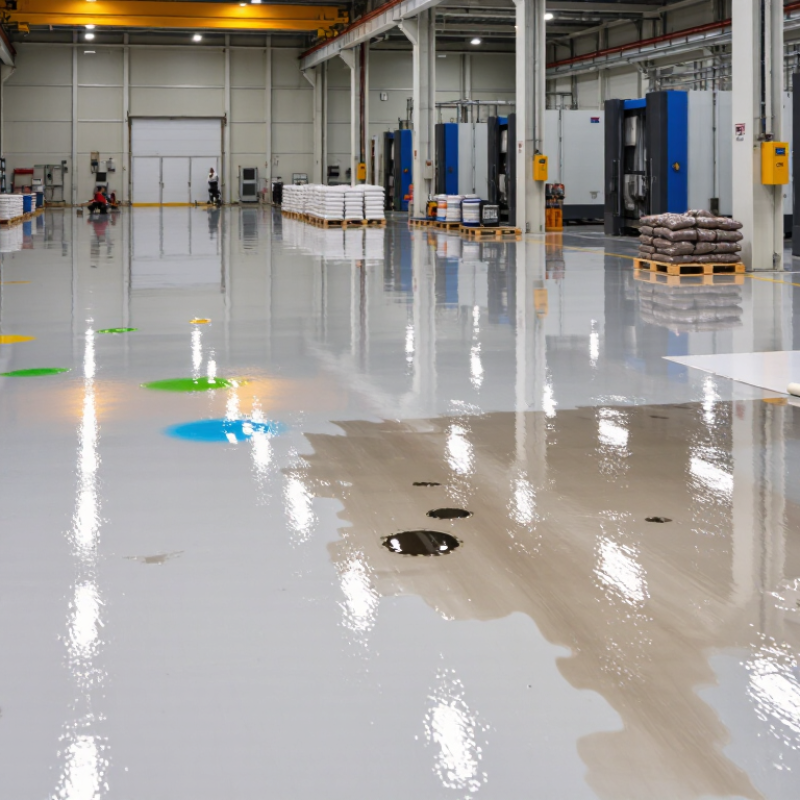
7 Best Ways to Enhance Chemical Resistance of Epoxy Floors

Assess Chemical Exposure with ASTM D543 and ISO 2812-1 Testing

7 Best Ways to Enhance Chemical Resistance of Epoxy Floors

Chemical resistance begins with exposure assessment, not product selection. List every liquid, concentration, temperature, contact time, and spill frequency. Then select an epoxy system for that exact service.

Seven practical improvements include proper substrate preparation, compatible resin chemistry, adequate film thickness, full curing, sealed joints, reinforced edges, and rapid spill removal. A clean, dry concrete surface remains essential.

ASTM D543 can assess how plastic-like materials respond to chemical exposure, including swelling, softening, staining, or mass change. ISO 2812-1 focuses on paints and coatings immersed in liquids. Use representative cured floor samples, not only manufacturer data. Test the actual chemical mixture when possible.

Record temperature and exposure duration carefully. Inspect gloss, color, blistering, adhesion, and hardness after exposure. Small differences matter. A coating may look sound but lose hardness beneath the surface.

Test results also have limits; site abrasion, heat cycles, and mixed chemicals can change performance.

Tips: Match the test duration to real service conditions. Photograph samples before and after testing. Include seams and repair areas. Ask an experienced laboratory to document preparation, curing, and evaluation methods. Do not treat one successful test as permanent proof. Field conditions are rarely perfect. A missed cleaning shift or unexpected concentration can still reveal a weak point.

Select Novolac Epoxy Systems Rated Above 150°C for Aggressive Chemicals

Chemical resistance begins with the resin choice. For aggressive acids, solvents, and hot process liquids, specify a novolac epoxy system rated above 150°C. This rating matters when a floor faces thermal cycling, not just occasional spills. However, the number is not a guarantee. Confirm the exact chemical, concentration, exposure time, and temperature with immersion-test data under ASTM D543 or ISO 2812-1.

Seven practical controls improve performance: select the correct novolac chemistry, prepare concrete properly, control moisture, apply the specified thickness, seal joints, repair cracks, and verify cure conditions. Surface preparation deserves attention. Weak laitance can detach beneath a strong coating, especially near tanks and transfer points. A clean, mechanically profiled surface creates a more reliable bond. Small details matter.

The NACE IMPACT study estimated global corrosion costs at about US$2.5 trillion annually, equal to roughly 3.4% of global GDP. That figure supports disciplined specification, not guesswork. In the field, record substrate temperature, humidity, batch numbers, and film thickness. Then compare the records with the technical data sheet. Something is often missed. A 150°C rating may describe dry heat, while a hot chemical bath creates a harsher combined exposure. Trial panels and site-specific testing remain the safer choice.

7 Best Ways to Enhance Chemical Resistance of Epoxy Floors

Select novolac epoxy systems rated above 150°C for aggressive chemical environments.

The chart compares seven practical design measures using a 1–10 implementation-priority scale for aggressive chemical flooring. Temperature ratings are typical specification bands: conventional epoxy systems are commonly limited to lower service temperatures, while high-performance novolac systems may be specified above 150°C when supported by the formulation, cure schedule, substrate preparation, and exposure conditions. Always verify immersion, concentration, thermal-shock, and cleaning-chemical data with project-specific test results.

Build 2–3 Coat Epoxy Systems with 300–500 μm Total Film Thickness

Chemical resistance starts with the whole floor system, not epoxy alone. A practical specification uses two or three coats, building 300–500 μm total dry film thickness. This range gives better coverage, fewer weak spots, and more time for chemicals to evaporate before reaching concrete. Surface preparation remains critical. Diamond grinding or shot blasting should remove laitance, oil, and loose particles. The substrate must also be dry.

Measure moisture before coating. Small vapor problems can create blisters beneath an excellent resin. Repair cracks, pinholes, and uneven edges before the first coat. Mix each component accurately, using a slow-speed mixer to reduce trapped air. Apply the coats within the stated recoat window. Too little thickness leaves thin areas around drains and corners. Too much thickness may trap solvent and cure unevenly.

Choose the final coat according to exposure. Acids, alkalis, solvents, and cleaning agents do not attack every formulation equally. Confirm resistance data against the actual concentration, temperature, and contact time. I have seen floors fail because testing used room-temperature splashes, while production involved hot, standing chemicals. That assumption needs challenging. A textured finish can improve safety, but deep texture may retain contaminants. Allow full curing before service, even when the surface feels hard. Scrutinize edges, joints, and repairs during inspections. These small details often decide whether a 400 μm system performs reliably.

Improve Adhesion by Achieving SSPC-SP 10 Concrete Surface Preparation

Strong chemical resistance begins beneath the epoxy film. A coating can resist acids and solvents only when it remains tightly bonded to prepared concrete.

SSPC-SP 10 describes near-white blast cleaning for steel, not concrete. That distinction matters. On concrete, an equivalent aggressive abrasive-blasting approach may remove laitance, old coatings, oil, and weak surface paste. However, the project specification should also identify the required concrete surface profile. I would confirm this with the engineer before work starts.

The surface should appear uniformly rough, clean, and free from dust. Vacuum the floor carefully, especially around joints and edges. Check for moisture, rising vapor, and contamination before mixing epoxy. A small plastic sheet test can reveal hidden dampness, although it is not a replacement for an approved moisture test. Do not guess.

My own mistake was trusting a visually clean floor after one blast pass. Later, weak paste detached under a test coating. A second pass exposed stronger concrete and improved adhesion. Test it. Use a pull-off test or a small bonded trial area when the floor is critical. Record the profile, cleaning method, temperature, and humidity. These details support reliable decisions when chemical exposure begins. Surface repairs must fully cure, and dust should be removed without leaving detergent residue. Good preparation takes time, but rushed preparation often becomes the first coating failure.

Control Curing at 20–25°C to Reach 7-Day Chemical Resistance Performance

Chemical resistance in epoxy floors begins before the coating is applied. Clean the concrete thoroughly, remove oil, and confirm the surface is dry. Repair cracks and weak areas before mixing. Moisture can create blisters and reduce adhesion. Temperature matters. Keep the room, slab, and materials between 20 and 25°C during application and early curing.

Accurate mixing is equally important. Measure resin and hardener by weight, not guesswork. Mix slowly for the specified time, then scrape the container walls. Apply the designed thickness with a notched squeegee and remove trapped air with a suitable roller. Control humidity and prevent dust from settling on the wet surface. Good ventilation helps, but strong air movement can chill the coating unevenly.

The seven-day target depends on disciplined curing, not only the calendar. Restrict foot traffic until the floor has hardened, and delay chemical exposure during the first seven days. At 20–25°C, many systems develop their intended chemical resistance within this period, but technical data should guide the exact timing. Test a small cured area with the expected chemical before full use. A common site mistake is assuming a hard surface is fully cured. It may feel solid while deeper layers remain vulnerable. Record temperature, humidity, batch ratios, and curing times for reliable quality checks. Temperature swings are easy to overlook. They deserve attention.

FAQS

What should be assessed before selecting an epoxy floor system?

List each liquid, concentration, temperature, contact time, and spill frequency. Real service details matter. A floor facing weekly hot spills needs different protection than one exposed to occasional splashes.

How can chemical resistance be tested realistically?

Use cured floor samples exposed to the actual chemical mixture when possible. Record temperature and exposure duration carefully. Inspect color, gloss, blistering, adhesion, hardness, swelling, and mass change.

Why can a coating look healthy but still fail?

Chemical exposure may reduce hardness beneath the surface without obvious discoloration. Small changes matter. Abrasion, heat cycles, and mixed liquids can worsen hidden damage.

Is a system rated above 150°C automatically suitable for aggressive chemicals?

No. A temperature rating is not permanent proof of chemical resistance. Confirm the exact chemical, concentration, exposure time, and temperature. A hot chemical bath may be harsher than dry heat.

What concrete preparation improves epoxy adhesion?

Remove laitance, weak paste, oil, dust, and old coatings through suitable mechanical preparation. The surface should be uniformly rough and clean. Vacuum joints and edges carefully.

Can near-white blast cleaning terminology be applied directly to concrete?

Not exactly. Near-white blast cleaning describes steel preparation. Concrete needs an appropriate surface profile and aggressive cleaning method. Confirm the project requirement with a qualified engineer.

How can hidden moisture affect chemical-resistant flooring?

Moisture or vapor pressure can weaken the bond beneath the coating. Check substrate moisture using an approved test. A plastic sheet check may reveal dampness, but it is not enough alone.

What application details should be recorded during installation?

Record substrate temperature, humidity, batch information, curing conditions, and film thickness. Seal joints and repair cracks before exposure begins. Details get missed sometimes.

Does one successful laboratory test prove permanent performance?

No. Field conditions may include abrasion, missed cleaning, temperature changes, and unexpected concentrations. Include seams, repairs, and realistic exposure periods in testing. Trial panels can reveal weaknesses early.

Conclusion

Enhance chemical resistance of epoxy resins for industrial floors by beginning with a careful assessment of the chemicals, concentrations, temperatures, and exposure times involved. ASTM D543 and ISO 2812-1 testing can help compare coating performance under representative conditions and identify potential weaknesses before installation. For highly aggressive environments, novolac epoxy systems rated above 150°C may provide improved resistance to solvents, acids, alkalis, and elevated operating temperatures.

Durability also depends on the complete floor system and installation process. A properly designed two- or three-coat system with a total film thickness of approximately 300–500 μm can create a more reliable protective barrier. Concrete should be prepared to SSPC-SP 10 standards to remove contaminants and develop a suitable bonding profile. Finally, maintaining curing conditions around 20–25°C supports proper film formation and helps the coating achieve its intended chemical resistance after approximately seven days.

Sienna

Sienna

Sienna is a skilled marketing professional with a deep expertise in our company’s core products and services. With a passion for innovation and detail, she plays a pivotal role in crafting insightful blog posts that not only highlight the unique features of our offerings but also provide valuable......